Before the Olympics, Sports Illustrated predicted that the United States would win 45 golds and 118 total medals. I mocked this prediction as too optimistic. In fact, the United States won 46 golds and 121 total medals -- almost exactly what SI expected.
Sports Illustrated also said that China would win 45 golds and 85 total medals. I mocked this prediction on the grounds that China would not lose that much ground from its 2012 performance. In fact, China finished with 26 golds and 70 total medals -- even worse than SI had predicted.
So SI was basically right, and I was entirely wrong. In fact, the United States beat China by 51 total medals -- the biggest gap between first and second place at a non-boycotted Olympics since 1932.
Showing posts with label Press. Show all posts
Showing posts with label Press. Show all posts
Monday, August 22, 2016

Thursday, March 26, 2015
Chuck Culpeper's Still Got It
Kentucky fans remember Chuck Culpeper's tenure as a sports columnist at the Lexington Herald-Leader as one of the few times we've had a local writer who decided to appreciate the UK fans instead of baiting them. Culpeper is with the Washington Post these days, and the Post sent him to Cleveland to cover the Midwest Regional. This column shows that he's still one of the very best when it comes to writing about UK basketball.
Monday, November 17, 2014
Now I Feel Terrible about those UNC Allegations
The Tar Heels have disappointed long-time UK-hater Billy Reed:
"I feel betrayed. Never in my wildest dreams could I envision the mother of all academic scandals happening at North Carolina. But the facts are as indisputable as they are mind-boggling."
But don't worry; Reed still took time to take shots at unnamed people who are obviously UK fans:
"Sadly, but predictably, some Carolina haters engaged in schadenfreude of the worst kind. Tired of what they perceived as a holier-than-thou attitude at UNC, they took great delight in Carolina's fall from grace. They demanded that titles be vacated, victories forfeited and monies returned."
And I also like his list of "clean" programs. Hmm, who's missing from this list?
"Whenever I'd get into an argument about cheating, I'd always cite North Carolina as Exhibit A of a highly successful program that did things the right way. My list also included Duke, Stanford, Wisconsin, Notre Dame, Louisville, Indiana, Michigan State and a few others. But North Carolina was the rock. Whenever a radio caller would insist that everybody cheats, North Carolina was my go-to program for proof that he (or she) was wrong."
Finally, for those of us who have spent almost 50 years hearing about the Texas Western game, this little touch about UNC's 1967 team is interesting:
"{T}he Tar Heels went on to earn Smith a berth in the 1967 Final Four in Louisville's Freedom Hall. I was assigned to cover the team's arrival at Standiford Field. When the players disembarked, waving small, Confederate flags, nobody thought it amounted to any more than regional pride. (Nevertheless, Dean didn't like it when I mentioned it years later.)"
Really? NOBODY thought it amounted to any more than regional pride. Not one person? Four years after the March on Washington, one year after Texas Western beat UK, and one year before George Wallace ran for President on a third-party ticket -- no one thought there was any political or racial significance to kids from a Southern school waving Confederate flags? That's surprising.
OK, so for 40 years one of the top sportswriters in Kentucky told people in Kentucky that UNC was literally the cleanest and most above-board program in the country -- confederate flags and all. By contrast, he insisted that UK was not such a program -- and implicitly repeats that charge in his most recent column. It turns out that he now thinks he was wrong about the Tar Heels -- but he still feel obliged to warn "Carolina haters" that they shouldn't be upset by "what they perceived" to be a holier-than-thou attitude at UNC. Thanks, Billy. I'll keep that advice in mind.
"I feel betrayed. Never in my wildest dreams could I envision the mother of all academic scandals happening at North Carolina. But the facts are as indisputable as they are mind-boggling."
But don't worry; Reed still took time to take shots at unnamed people who are obviously UK fans:
"Sadly, but predictably, some Carolina haters engaged in schadenfreude of the worst kind. Tired of what they perceived as a holier-than-thou attitude at UNC, they took great delight in Carolina's fall from grace. They demanded that titles be vacated, victories forfeited and monies returned."
And I also like his list of "clean" programs. Hmm, who's missing from this list?
"Whenever I'd get into an argument about cheating, I'd always cite North Carolina as Exhibit A of a highly successful program that did things the right way. My list also included Duke, Stanford, Wisconsin, Notre Dame, Louisville, Indiana, Michigan State and a few others. But North Carolina was the rock. Whenever a radio caller would insist that everybody cheats, North Carolina was my go-to program for proof that he (or she) was wrong."
Finally, for those of us who have spent almost 50 years hearing about the Texas Western game, this little touch about UNC's 1967 team is interesting:
"{T}he Tar Heels went on to earn Smith a berth in the 1967 Final Four in Louisville's Freedom Hall. I was assigned to cover the team's arrival at Standiford Field. When the players disembarked, waving small, Confederate flags, nobody thought it amounted to any more than regional pride. (Nevertheless, Dean didn't like it when I mentioned it years later.)"
Really? NOBODY thought it amounted to any more than regional pride. Not one person? Four years after the March on Washington, one year after Texas Western beat UK, and one year before George Wallace ran for President on a third-party ticket -- no one thought there was any political or racial significance to kids from a Southern school waving Confederate flags? That's surprising.
OK, so for 40 years one of the top sportswriters in Kentucky told people in Kentucky that UNC was literally the cleanest and most above-board program in the country -- confederate flags and all. By contrast, he insisted that UK was not such a program -- and implicitly repeats that charge in his most recent column. It turns out that he now thinks he was wrong about the Tar Heels -- but he still feel obliged to warn "Carolina haters" that they shouldn't be upset by "what they perceived" to be a holier-than-thou attitude at UNC. Thanks, Billy. I'll keep that advice in mind.
Saturday, September 14, 2013
Texas A & M v. Alabama
There are many things about the American South that non-Southerners find difficult to understand, but perhaps one of the most difficult has to do with the attitude of Southerners toward authority. Let us take, as an example, two men who were made into icons by white Southerners after the Civil War. On the one hand, you have Robert E. Lee, a man famous for his dignity and personal integrity, someone with such personal discipline that he made it through West Point without a single demerit. On the other hand, you have James Ewell Brown ("Jeb") Stuart, the eccentric cavalryman who went through war wearing a red-lined gray cape, yellow sash, and cocked hat with ostrich plume. While Lee was working out plans in his tent, Stuart was off leading his men on wild rides which sometimes took them all the way around the Northern Army.
Now obviously these men represent very different images of authority. For white Southerners, Lee symbolized the Perfect General, an older man of wisdom and honor, whose orders were to be followed without question. Every time you see an SEC football coach with his honor guard of State Troopers, you are seeing shades of the old Lee-Worship. And from General Bob Neyland to Bobby Dodd to Bear Bryant, Southerners have loved their strict football coaches.
On the other hand, Stuart is the clever rebel, the trickster, the man who thumbs his nose at rules and norms -- and, because of sheer talent and ability -- can get away with it (at least for awhile). And the South has worked this icon into its culture as well -- from Burt Reynolds outwitting the police in his Trans Am to Kenny Stabler using a fake fumble to beat the San Diego Chargers. Many of the South's legendary gridiron heroes -- Stabler, Bobby Layne, Joe Namath -- fit into this category.
Now how can the same culture love both Generals and rebels? How can the same fans cheer for Bear Bryant and Kenny Stabler? (You can't imagine this sort of inconsistency in the Midwest; it's impossible to imagine Kenny Stabler playing for Woody Hayes, or Alan Iverson getting along with Bobby Knight.) And yet to Southerners this is not strange at all -- both the Stern Coach and the Rebel Player are icons in our society.
Personally, I don't think there's as much inconsistency here as some folks may think. It seems to me that Southerners, more than most other Americans, are obsessed with the distinction between legitimate and illegitimate authority. And they tend to judge legitimacy not merely by process, but by results. If you want them to respect you, it's not enough to win the election or get the post through a fair process; you have to do a good job.
These days, Nick Saban has become an almost perfect symbol of legitimate authority, at least to Alabama fans. In the last four years, his teams have won three national championships. They play hard-hitting, straightforward football, with no odd uniforms or trash-talking. The rest of the country may see Saban as cold, or relentless, or shifty, or boring, but to most SEC fans -- even the ones who hate him -- he's what a college football coach is supposed to be.
On the other hand, the NCAA and the national press are almost-perfect symbols of illegitimate authority, at least to most SEC fans. Of course we have to make sure that everyone is playing under the same set of rules -- but to SEC fans, that's exactly what the NCAA and the press doesn't do. To most Southerners, what is so maddening about these institutions is the inconsistency and favoritism that they appear to show. You could never convince SEC fans that ESPN favorites like Duke or Notre Dame will be held to the same standards as Tennessee or Mississippi State. And so my guess is that almost no one in the South was genuinely troubled by the countless allegations made by ESPN and other national media outlets over the summer against Johnny Manziel. To most of us, the NCAA and the press are just a pack of Buford T. Justices, and we don't mind seeing Manziel subvert their authority.
So while it would be easy to build up today's contest as a battle between Saban's robots and A & M's outlaws, I think that would be a mistake. My guess that almost every A & M fan would be happy to have Saban coaching the Aggies, and almost every Tide fan would be happy to have Johnny Football throwing passes for Alabama. Furthermore, A & M and Alabama aren't really close enough for the two fan bases to get on top of each other in the way you need for true, deep down hatred. And besides, each teams fans had a great time last year -- A & M beat Alabama, but Alabama won the National Championship.
At the same time, SEC fans can't help but be excited to see whether Saban's defense has finally figured out how to stop Manziel, or whether Johnny Football (has there ever been a better nickname?) can pull off the upset one more time.
Here is how each team has done since the beginning of last season (home teams listed first):
ALABAMA (2012 SEC Champs and National Champs):
09/01/2012: Alabama 41 - 14 Michigan (Arlington, Tex.)
09/08/2012: Alabama 35 - 0 W. Kentucky
09/15/2012: Arkansas 0 - 52 Alabama
09/22/2012: Alabama 40 - 7 Florida Atlantic
09/29/2012: Alabama 33 -14 Mississippi
10/13/2012: Missouri 10 - 42 Alabama
10/20/2012: Tennessee 13 - 44 Alabama
10/27/2012: Alabama 38 - 7 Mississippi St.
11/03/2012: Louisiana St. 17 - 21 Alabama
11/10/2012: Alabama 24 - 29 Texas A & M
11/17/2012: Alabama 49 - 0 W. Carolina
11/24/2012: Alabama 49 - 0 Auburn
12/01/2012: Alabama 32 - 28 Georgia (Atlanta) (SEC Championship)
01/07/2013: Alabama 41 - 14 Notre Dame (Miami) (National Championship)
08/31/2013: Alabama 35 - 10 Virginia Tech (Atlanta)
TEXAS A & M (2012 Cotton Bowl Champs):
09/08/2012: Texas A & M 17 - 20 Florida
09/15/2012: So. Methodist 3 - 48 Texas A & M
09/22/2012: Texas A & M 70 - 14 S. Carolina St.
09/29/2012: Texas A & M 58 - 10 Arkansas
10/06/2012: Mississippi 27 - 30 Texas A & M
10/13/2012: Louisiana Tech 57 - 59 Texas A & M
10/20/2012: Texas A & M 19 - 24 Louisiana St.
10/27/2012: Auburn 21 - 63 Texas A & M
11/03/2012: Mississippi St. 13 - 38 Texas A & M
11/10/2012: Alabama 24 - 29 Texas A & M
11/17/2012: Texas A & M 47 - 28 Sam Houston St.
11/24/2012: Texas A & M 59 - 29 Missouri
01/04/2012: Texas A & M 41 - 13 Oklahoma (Arlington, Tex.) (Cotton Bowl)
08/31/2012: Texas A & M 52 - 31 Rice
09/07/2012: Texas A & M 65 - 28 Sam Houston St.
Alabama is favored by 9 points, and the over-under is 64. That would work out to an Alabama victory by a score of something like 37-27.
Any further thoughts will go into the comments.
Now obviously these men represent very different images of authority. For white Southerners, Lee symbolized the Perfect General, an older man of wisdom and honor, whose orders were to be followed without question. Every time you see an SEC football coach with his honor guard of State Troopers, you are seeing shades of the old Lee-Worship. And from General Bob Neyland to Bobby Dodd to Bear Bryant, Southerners have loved their strict football coaches.
On the other hand, Stuart is the clever rebel, the trickster, the man who thumbs his nose at rules and norms -- and, because of sheer talent and ability -- can get away with it (at least for awhile). And the South has worked this icon into its culture as well -- from Burt Reynolds outwitting the police in his Trans Am to Kenny Stabler using a fake fumble to beat the San Diego Chargers. Many of the South's legendary gridiron heroes -- Stabler, Bobby Layne, Joe Namath -- fit into this category.
Now how can the same culture love both Generals and rebels? How can the same fans cheer for Bear Bryant and Kenny Stabler? (You can't imagine this sort of inconsistency in the Midwest; it's impossible to imagine Kenny Stabler playing for Woody Hayes, or Alan Iverson getting along with Bobby Knight.) And yet to Southerners this is not strange at all -- both the Stern Coach and the Rebel Player are icons in our society.
Personally, I don't think there's as much inconsistency here as some folks may think. It seems to me that Southerners, more than most other Americans, are obsessed with the distinction between legitimate and illegitimate authority. And they tend to judge legitimacy not merely by process, but by results. If you want them to respect you, it's not enough to win the election or get the post through a fair process; you have to do a good job.
These days, Nick Saban has become an almost perfect symbol of legitimate authority, at least to Alabama fans. In the last four years, his teams have won three national championships. They play hard-hitting, straightforward football, with no odd uniforms or trash-talking. The rest of the country may see Saban as cold, or relentless, or shifty, or boring, but to most SEC fans -- even the ones who hate him -- he's what a college football coach is supposed to be.
On the other hand, the NCAA and the national press are almost-perfect symbols of illegitimate authority, at least to most SEC fans. Of course we have to make sure that everyone is playing under the same set of rules -- but to SEC fans, that's exactly what the NCAA and the press doesn't do. To most Southerners, what is so maddening about these institutions is the inconsistency and favoritism that they appear to show. You could never convince SEC fans that ESPN favorites like Duke or Notre Dame will be held to the same standards as Tennessee or Mississippi State. And so my guess is that almost no one in the South was genuinely troubled by the countless allegations made by ESPN and other national media outlets over the summer against Johnny Manziel. To most of us, the NCAA and the press are just a pack of Buford T. Justices, and we don't mind seeing Manziel subvert their authority.
So while it would be easy to build up today's contest as a battle between Saban's robots and A & M's outlaws, I think that would be a mistake. My guess that almost every A & M fan would be happy to have Saban coaching the Aggies, and almost every Tide fan would be happy to have Johnny Football throwing passes for Alabama. Furthermore, A & M and Alabama aren't really close enough for the two fan bases to get on top of each other in the way you need for true, deep down hatred. And besides, each teams fans had a great time last year -- A & M beat Alabama, but Alabama won the National Championship.
At the same time, SEC fans can't help but be excited to see whether Saban's defense has finally figured out how to stop Manziel, or whether Johnny Football (has there ever been a better nickname?) can pull off the upset one more time.
Here is how each team has done since the beginning of last season (home teams listed first):
ALABAMA (2012 SEC Champs and National Champs):
09/01/2012: Alabama 41 - 14 Michigan (Arlington, Tex.)
09/08/2012: Alabama 35 - 0 W. Kentucky
09/15/2012: Arkansas 0 - 52 Alabama
09/22/2012: Alabama 40 - 7 Florida Atlantic
09/29/2012: Alabama 33 -14 Mississippi
10/13/2012: Missouri 10 - 42 Alabama
10/20/2012: Tennessee 13 - 44 Alabama
10/27/2012: Alabama 38 - 7 Mississippi St.
11/03/2012: Louisiana St. 17 - 21 Alabama
11/10/2012: Alabama 24 - 29 Texas A & M
11/17/2012: Alabama 49 - 0 W. Carolina
11/24/2012: Alabama 49 - 0 Auburn
12/01/2012: Alabama 32 - 28 Georgia (Atlanta) (SEC Championship)
01/07/2013: Alabama 41 - 14 Notre Dame (Miami) (National Championship)
08/31/2013: Alabama 35 - 10 Virginia Tech (Atlanta)
TEXAS A & M (2012 Cotton Bowl Champs):
09/08/2012: Texas A & M 17 - 20 Florida
09/15/2012: So. Methodist 3 - 48 Texas A & M
09/22/2012: Texas A & M 70 - 14 S. Carolina St.
09/29/2012: Texas A & M 58 - 10 Arkansas
10/06/2012: Mississippi 27 - 30 Texas A & M
10/13/2012: Louisiana Tech 57 - 59 Texas A & M
10/20/2012: Texas A & M 19 - 24 Louisiana St.
10/27/2012: Auburn 21 - 63 Texas A & M
11/03/2012: Mississippi St. 13 - 38 Texas A & M
11/10/2012: Alabama 24 - 29 Texas A & M
11/17/2012: Texas A & M 47 - 28 Sam Houston St.
11/24/2012: Texas A & M 59 - 29 Missouri
01/04/2012: Texas A & M 41 - 13 Oklahoma (Arlington, Tex.) (Cotton Bowl)
08/31/2012: Texas A & M 52 - 31 Rice
09/07/2012: Texas A & M 65 - 28 Sam Houston St.
Alabama is favored by 9 points, and the over-under is 64. That would work out to an Alabama victory by a score of something like 37-27.
Any further thoughts will go into the comments.
Tuesday, August 20, 2013
Sports Radio and Me
This morning, as I was driving into the office, I tried three different sports radio stations:
1. On Mad Dog Radio (XM Channel 86), they were arguing about whether a Red Sox pitcher had deliberately hit Alex Rodriguez in a baseball game last weekend. (At this point, coolstandings.com gives the Yankees a 6.9 percent chance of making the playoffs, so talking about A-Rod is an even bigger waste of time than usual.)
2. On WJFK-FM (106.7 FM), they were arguing about whether to make Cal Ripken (!) the next manager of Natstown. (Cal Ripken has never managed before, is not likely to start with the Nats, and would not be likely to succeed if he got the job. This is exactly the sort of sports story that the D.C. media loves, as it appeals to people who know very little about sports. It also explains why the Redskins -- with full support from the local press -- thought they were doing the right thing by replacing Marty Schottenheimer with Steve Spurrier.)
3. On ESPN Radio (XM Channel 84), they were arguing about how injuries in New England would affect Tim Tebow's chances of playing. (I think every segment on ESPN Radio has to cover either Tim Tebow or Johnny Football.)
I spent the rest of my commute listening to bluegrass music. But I would love to know more about why so much of sports radio -- which should be fun -- is simply unpleasant.
1. On Mad Dog Radio (XM Channel 86), they were arguing about whether a Red Sox pitcher had deliberately hit Alex Rodriguez in a baseball game last weekend. (At this point, coolstandings.com gives the Yankees a 6.9 percent chance of making the playoffs, so talking about A-Rod is an even bigger waste of time than usual.)
2. On WJFK-FM (106.7 FM), they were arguing about whether to make Cal Ripken (!) the next manager of Natstown. (Cal Ripken has never managed before, is not likely to start with the Nats, and would not be likely to succeed if he got the job. This is exactly the sort of sports story that the D.C. media loves, as it appeals to people who know very little about sports. It also explains why the Redskins -- with full support from the local press -- thought they were doing the right thing by replacing Marty Schottenheimer with Steve Spurrier.)
3. On ESPN Radio (XM Channel 84), they were arguing about how injuries in New England would affect Tim Tebow's chances of playing. (I think every segment on ESPN Radio has to cover either Tim Tebow or Johnny Football.)
I spent the rest of my commute listening to bluegrass music. But I would love to know more about why so much of sports radio -- which should be fun -- is simply unpleasant.
Monday, August 19, 2013
The Louisville Lip
In the summer of 1963, the boxing world was buzzing over Sonny Liston's recent knockout of Floyd Patterson, by which Liston retained the heavyweight championship of the world. Louisville's own Cassius Clay, now the number 1 heavyweight contender, insisted that he could beat Liston. In its episode for August 5, 1963, Sports Illustrated strongly disagreed:
Clay's style is made to order for another massacre. He carries his hands too low, he leans away from a punch and he cannot fight a lick inside. He will face in Liston an opponent with endurance, highly developed skills, deceptive speed and strength enough to stun an elephant with either hand. Yet Cassius loudly insists that he is going to whup "that big ugly bear" when they meet, most likely in Philadelphia this September.
The oddsmakers do not think much of Clay's chances. James (Jimmie the Greek) Snyder, handicapper emeritus, figures that Liston should be an overwhelming 8-to-1 favorite. The only way a Liston backer can get any kind of odds is to pick one of the first six rounds for the knockout. "It's impossible," says Jimmie the Greek, "for Clay to last six rounds."
On February 25, 1964, Clay beat Liston, and became the world heavyweight champion, when Liston refused to answer the bell for the seventh round.
Clay's style is made to order for another massacre. He carries his hands too low, he leans away from a punch and he cannot fight a lick inside. He will face in Liston an opponent with endurance, highly developed skills, deceptive speed and strength enough to stun an elephant with either hand. Yet Cassius loudly insists that he is going to whup "that big ugly bear" when they meet, most likely in Philadelphia this September.
The oddsmakers do not think much of Clay's chances. James (Jimmie the Greek) Snyder, handicapper emeritus, figures that Liston should be an overwhelming 8-to-1 favorite. The only way a Liston backer can get any kind of odds is to pick one of the first six rounds for the knockout. "It's impossible," says Jimmie the Greek, "for Clay to last six rounds."
On February 25, 1964, Clay beat Liston, and became the world heavyweight champion, when Liston refused to answer the bell for the seventh round.
Tuesday, June 25, 2013
The Washington Post Criticizes John Wall for Tattoos?
The Washington Wizards may be the worst franchise in all of major sports. The Wizards haven't won their division since 1979, when they were still the Washington Bullets. Since renaming themselves the "Wizards" in 1997, the team has won only 39.1 percent of its regular-season games. Year after year, they are simply terrible. Last year was the fifth consecutive season in which the Wizards failed to win 30 games.
Now John Wall is the only good player the Wizards have. Last year, Wall was injured at the beginning of the season, and the team started off with a record of 4-28. In other words, without John Wall, the 2012-13 Wizards were one of the worst basketball franchises ever. The Wizards then went 25-25 the rest of the way. So with Wall, the Wizards were basically a playoff team. That's how important he was to the Wizards.
But yesterday, Jason Reid wrote that the Wiz should not sign Wall to a major long-term contract. Reid gave several reasons for this argument, one of which was that Wall had gotten a bunch of tattoos after claiming that he wouldn't. To Reid, this raises troubling questions about whether Wall is unstable:
{N}ot every player flip-flops on a topic in such a public way. Factor in that Wall is expected to receive a huge payday from the Wizards next month, and the timing of his tattoo revelation raises questions about his decision making. For a franchise with a history of backing the wrong players, that’s food for thought.
Reid goes on to write that Wall almost makes you feel sorry for Wizards GM Ernie Grunfeld, even though Grunfeld put together the team that went 4-28 to start the season last year, while Wall is the only reason the Wizards' record was even respectable.
Look, it's very simple: (1) the Wizards can pay Wall an enormous salary and hope it works out; (2) the Wizards can refuse to pay Wall an enormous salary and watch him leave. Path (1) gives the Wizards some chance of having a good team; path (2) means that the Wizards will be terrible for years to come. Those are the choices, because that's the terrible position the Wizards have put themselves in. None of this is John Wall's fault, and none of it has anything to do with his tattoos. It's incredible to me that anyone would look at this situation, and choose to attack Wall, and to feel sorry for Grunfeld.
Personally, I hope the Wizards don't sign Wall, and he's able to play for a decent franchise. And then I hope he comes here and score 50 points against the Wizards. And I hope Jason Reid covers that game.
UPDATE: Brobible.com named Reid's article the "Worst Sports Column of 2013."
Now John Wall is the only good player the Wizards have. Last year, Wall was injured at the beginning of the season, and the team started off with a record of 4-28. In other words, without John Wall, the 2012-13 Wizards were one of the worst basketball franchises ever. The Wizards then went 25-25 the rest of the way. So with Wall, the Wizards were basically a playoff team. That's how important he was to the Wizards.
But yesterday, Jason Reid wrote that the Wiz should not sign Wall to a major long-term contract. Reid gave several reasons for this argument, one of which was that Wall had gotten a bunch of tattoos after claiming that he wouldn't. To Reid, this raises troubling questions about whether Wall is unstable:
{N}ot every player flip-flops on a topic in such a public way. Factor in that Wall is expected to receive a huge payday from the Wizards next month, and the timing of his tattoo revelation raises questions about his decision making. For a franchise with a history of backing the wrong players, that’s food for thought.
Reid goes on to write that Wall almost makes you feel sorry for Wizards GM Ernie Grunfeld, even though Grunfeld put together the team that went 4-28 to start the season last year, while Wall is the only reason the Wizards' record was even respectable.
Look, it's very simple: (1) the Wizards can pay Wall an enormous salary and hope it works out; (2) the Wizards can refuse to pay Wall an enormous salary and watch him leave. Path (1) gives the Wizards some chance of having a good team; path (2) means that the Wizards will be terrible for years to come. Those are the choices, because that's the terrible position the Wizards have put themselves in. None of this is John Wall's fault, and none of it has anything to do with his tattoos. It's incredible to me that anyone would look at this situation, and choose to attack Wall, and to feel sorry for Grunfeld.
Personally, I hope the Wizards don't sign Wall, and he's able to play for a decent franchise. And then I hope he comes here and score 50 points against the Wizards. And I hope Jason Reid covers that game.
UPDATE: Brobible.com named Reid's article the "Worst Sports Column of 2013."
Thursday, May 2, 2013
Baseball Reporters Have Been Complaining for a Long Time
The following was written by Sam Crane, who covered baseball for the New York Evening Journal, on October 7, 1908, and was republished in The Unforgettable Season, a great book by G.H. Fleming:
"In earlier days of baseball there was a sentiment attached to the national game that made games take on the appearance of a real battle between cities and sections, but sentiment no longer figures in the sport. It is now only a battle of dollars. The business end of baseball has so superseded the real sport that used to cause legitimate and honest rivalry for sport's sake alone I personally wouldn't care if the whole foundation of the national game went to the dogs."
Most experts, of course, regard the 1908 season -- which featured a titanic battle for the National League pennant among the Giants, Cubs, and Pirates -- as one of the greatest seasons in baseball history. But as this quote shows, no matter how far back in time you go, you can almost always find people who pine for a lost golden age.
"In earlier days of baseball there was a sentiment attached to the national game that made games take on the appearance of a real battle between cities and sections, but sentiment no longer figures in the sport. It is now only a battle of dollars. The business end of baseball has so superseded the real sport that used to cause legitimate and honest rivalry for sport's sake alone I personally wouldn't care if the whole foundation of the national game went to the dogs."
Most experts, of course, regard the 1908 season -- which featured a titanic battle for the National League pennant among the Giants, Cubs, and Pirates -- as one of the greatest seasons in baseball history. But as this quote shows, no matter how far back in time you go, you can almost always find people who pine for a lost golden age.
Wednesday, May 1, 2013
The Kentucky Derby Is Decadent and Depraved -- In Poster Form
Only a small number of folks will appreciate -- or even understand -- this poster, which is based on Hunter Thompson's legendary article about the 1970 Kentucky Derby. But fans of the Good Doctor will be ecstatic.
Saturday, April 13, 2013
Masters Day 2 Wrap-Up
Well, the press was denied its pound of flesh after Guan Tianlang made the cut yesterday. It was a frustrating day for the media, which was prepared to explode with rage against Augusta National for an officials' decision to penalize Guan for slow play. But the official turned out to be the most respected of the European officials, and Guan made the cut anyway -- so the media (which hesitates to criticize any European, and which could not prove that Guan's life had been significantly affected by the event) was forced to merely huff and puff in fury.
But now the press are excited again, because Tiger Woods may have made an illegal drop on the 15th hole. At least one middle-aged reporter is already howling for blood:
Dave Kindred: "The kid handled it well. My column. Next, will Tiger to the right thing and DQ himself?"
Ah, the columns just write themselves: "Rules are rules." "Fair treatment for everyone." "No special privileges." But it all comes back to the same thing: the press likes Guan (who is a great story) and they don't like Tiger (who refuses to talk to them).
Of course, there was a time when Tiger was young, and a great story, and he spoke openly to reporters. But that led to an infamous story in which Charles Pierce of Esquire published a bunch of dirty jokes he heard a 21-year-old Tiger telling while at a photoshoot, and we've never heard Tiger speak in his own voice since. According to how the media keeps score, however, the blame for this falls on Tiger, not Charles Pierce, and so much of the press will dance with glee if the world's most popular golfer is disqualified.
UPDATE (9:47 A.M.): Tiger was penalized two shots, but was NOT disqualified. As I expected, the press is furious:
Dave Kindred: "A man signs an an incorrect scorecard and is not DQ'd? Somewhere, Bobby Jones sighs at what's become of his child."
Dave Kindred: "Rule 26.1 a) amended by Masters to include the phrase, "...except in cases involving competitors important to television ratings."
Dan Jenkins: "No DQ for Tiger but a two-stroke penalty? Roberto de Vicenzo, show up at the Butler Cabin and fetch your green jacket."
(Actually, a two-stroke penalty would have been sufficient to deny Roberto de Vicenzo the 1968 Masters title. De Vicenzo didn't have a victory taken away from him for failing to sign an incorrect scorecard; he was denied the chance for an 18-hole playoff with Bob Goalby, because if De Vicenzo's scorecard had been accurate, he and Goalby would have tied. So a two-stroke penalty would have given the title to Goalby.)
Here is the leaderboard now that Tiger has effectively been eliminated from competition. The media will be thrilled, as the evil Americans now have almost no chance of victory:
1. J. Day (AUS): -6 (70+68=138)
T2. F. Couples: -5 (68+71=139)
T2. M. Leishman (AUS): -5 (66+73=139)
T4. A. Cabera (ARG): -4 (71+69=140)
T4. J. Furyk: -4 (69+71=140)
T4. B. Snedeker: -4 (70+70=140)
T7. A. Scott (AUS): -3 (69+72=141)
T7. J. Dufner: -3 (72+69=141)
T7. D. Lynn (ENG): -3 (68+73=141)
T7. L. Westwood (ENG): -3 (70+71=141)
T7. J. Rose (ENG): -3 (70+71=141)
T7. K.J. Choi (KOR): -3 (70+71=141)
But now the press are excited again, because Tiger Woods may have made an illegal drop on the 15th hole. At least one middle-aged reporter is already howling for blood:
Dave Kindred: "The kid handled it well. My column. Next, will Tiger to the right thing and DQ himself?"
Ah, the columns just write themselves: "Rules are rules." "Fair treatment for everyone." "No special privileges." But it all comes back to the same thing: the press likes Guan (who is a great story) and they don't like Tiger (who refuses to talk to them).
Of course, there was a time when Tiger was young, and a great story, and he spoke openly to reporters. But that led to an infamous story in which Charles Pierce of Esquire published a bunch of dirty jokes he heard a 21-year-old Tiger telling while at a photoshoot, and we've never heard Tiger speak in his own voice since. According to how the media keeps score, however, the blame for this falls on Tiger, not Charles Pierce, and so much of the press will dance with glee if the world's most popular golfer is disqualified.
UPDATE (9:47 A.M.): Tiger was penalized two shots, but was NOT disqualified. As I expected, the press is furious:
Dave Kindred: "A man signs an an incorrect scorecard and is not DQ'd? Somewhere, Bobby Jones sighs at what's become of his child."
Dave Kindred: "Rule 26.1 a) amended by Masters to include the phrase, "...except in cases involving competitors important to television ratings."
Dan Jenkins: "No DQ for Tiger but a two-stroke penalty? Roberto de Vicenzo, show up at the Butler Cabin and fetch your green jacket."
(Actually, a two-stroke penalty would have been sufficient to deny Roberto de Vicenzo the 1968 Masters title. De Vicenzo didn't have a victory taken away from him for failing to sign an incorrect scorecard; he was denied the chance for an 18-hole playoff with Bob Goalby, because if De Vicenzo's scorecard had been accurate, he and Goalby would have tied. So a two-stroke penalty would have given the title to Goalby.)
Here is the leaderboard now that Tiger has effectively been eliminated from competition. The media will be thrilled, as the evil Americans now have almost no chance of victory:
1. J. Day (AUS): -6 (70+68=138)
T2. F. Couples: -5 (68+71=139)
T2. M. Leishman (AUS): -5 (66+73=139)
T4. A. Cabera (ARG): -4 (71+69=140)
T4. J. Furyk: -4 (69+71=140)
T4. B. Snedeker: -4 (70+70=140)
T7. A. Scott (AUS): -3 (69+72=141)
T7. J. Dufner: -3 (72+69=141)
T7. D. Lynn (ENG): -3 (68+73=141)
T7. L. Westwood (ENG): -3 (70+71=141)
T7. J. Rose (ENG): -3 (70+71=141)
T7. K.J. Choi (KOR): -3 (70+71=141)
Monday, March 18, 2013
Enjoy It While You Can, Mark Story
Here's a serious question: How many people picked up the Lexington Herald-Leader today and said to themselves, "Man, I would really like to read an article about why Middle Tennessee was more worthy of playing in the NCAA Tournament than UK?" My guess is none -- unless, of course, you count the Cat-haters who work at the LHL. So of course our old friend, Mark Story -- who argued in March 2009 that the Big Blue should give Billy Gillispie more time -- is out with a column commending the NCAA for picking the Blue Raiders over the Wildcats. As far as I can tell, Story wrote this column solely in the hope that some UK fan would see it -- presumably by accident -- and feel just a little bit worse about this year's basketball season. I don't know why the LHL pays someone -- well, a bunch of folks, really -- to insult the UK fan base. But at least they are consistent.
Thursday, January 17, 2013
Thursday, January 10, 2013
No One Voted into the Baseball Hall of Fame
I was glad to see that no one was elected to the Baseball Hall of Fame this year. My guess is that over time, the voters will not hold the line on the Steroid Era, and we'll end up seeing lots of those folks getting into Cooperstown. But I would never let them in. The Steroid Era was, in my opinion, the worst period in baseball history since the World Series began in 1903. The game was not pleasant to watch -- in large part because it was dominated by people like Barry Bonds who were doing things that normal human beings can't actually do. Even the big and exciting things that happened -- the home run chases, the great Roger Clemens pitching performances, that one year when Brady Anderson hit 50 home runs -- were tainted because you knew that what you were watching wasn't real.
The fact that everyone associated with baseball went along with steroids, and did virtually nothing to stop it, makes everything worse. Remember how the press hyped the McGwire/Sosa home run chase? Remember how Mike Lupica said that 1998 was the year that baseball "reclaimed America"? I do, and I don't want to see anything like that happen again.
So here's my preference. Years from now, when people go to the Baseball Hall of Fame, I want almost no players from the Steroid Era in there. No Bonds. No Clemens. No Sosa or McGwire. And certainly no second-tier guys like Mike Piazza or Craig Biggio. Not even Greg Maddux, who had a lifetime record of 11-14 in the playoffs, or Tom Glavine (who went 14-16 in the playoffs). If it were up to me, the only players you'd see from that era would be Derek Jeter, Mariano Rivera, Pedro Martinez, and Randy Johnson. And whenever people asked about what happened, they would be told that this was a terrible period in baseball history, and that we've chosen to mostly forget it.
The fact that everyone associated with baseball went along with steroids, and did virtually nothing to stop it, makes everything worse. Remember how the press hyped the McGwire/Sosa home run chase? Remember how Mike Lupica said that 1998 was the year that baseball "reclaimed America"? I do, and I don't want to see anything like that happen again.
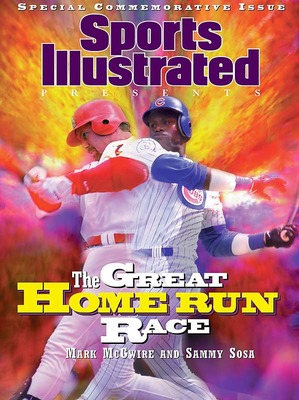
So here's my preference. Years from now, when people go to the Baseball Hall of Fame, I want almost no players from the Steroid Era in there. No Bonds. No Clemens. No Sosa or McGwire. And certainly no second-tier guys like Mike Piazza or Craig Biggio. Not even Greg Maddux, who had a lifetime record of 11-14 in the playoffs, or Tom Glavine (who went 14-16 in the playoffs). If it were up to me, the only players you'd see from that era would be Derek Jeter, Mariano Rivera, Pedro Martinez, and Randy Johnson. And whenever people asked about what happened, they would be told that this was a terrible period in baseball history, and that we've chosen to mostly forget it.
Monday, January 7, 2013
Notre Dame 14 - 42 Alabama (BCS Title Game)
I'll have more to say about this game later, but I just wanted an excuse to link to our old friend Pat Forde, who seems to like SEC football as much as he likes UK basketball.
Oh, and while I'm at it, here's a link to our old friend Gene Wojciechowski, the UT grad who was surprised folks in Kentucky didn't want to buy his book about the 1992 Duke/Kentucky game.
For me, the funniest part of the broadcast was at halftime when Nick Saban was going off the field with a 28-0 lead, and he had to talk to the sideline reporter as if Notre Dame still had a chance.
Oh, and while I'm at it, here's a link to our old friend Gene Wojciechowski, the UT grad who was surprised folks in Kentucky didn't want to buy his book about the 1992 Duke/Kentucky game.
For me, the funniest part of the broadcast was at halftime when Nick Saban was going off the field with a 28-0 lead, and he had to talk to the sideline reporter as if Notre Dame still had a chance.
Monday, December 3, 2012
AP v. KenPom
After last week's losses to Notre Dame and Baylor, the AP dropped Kentucky from 8th to completely out of the top 25 -- the biggest drop out of the poll since the AP went to a top 25 in 1990.
After the same results, Ken Pomeroy has dropped the Cats from 9th to 12th. He projects the Cats to finish 22-9 overall and 13-5 in the SEC.
We will see who is right.
After the same results, Ken Pomeroy has dropped the Cats from 9th to 12th. He projects the Cats to finish 22-9 overall and 13-5 in the SEC.
We will see who is right.
Wednesday, November 28, 2012
Lincoln the Uncompromiser
Kudos to Adam Gopnik for this good piece in The New Yorker about the new Lincoln movie. We are often told that Lincoln is a great man, and that compromise is a great virtue, and therefore it is easy to conclude that Lincoln must have liked compromise. And you can put together a story of Lincoln that makes it appear that he was open to compromise. As Gopnik rightfully points out, however, that's not the primary strain in Lincoln's character. Yes, Lincoln was a founder of the Midwest, and like many in the Midwest, Lincoln loved to be fair -- he loved the idea that everyone should play by the rules. But also like many in the Midwest, Lincoln believed in punishing those who, in his opinion, had violated the rules.
For almost 100 years, Americans had been dancing around the possibility of what horrors might take place if the North tried to end slavery in the South. Even after the war began, many in the North recoiled at what was happening. (I think this explains, in part, why McClellan fought the war with such little enthusiasm.) It was Lincoln (and his fellow Midwesterners, Grant and Sherman) who saw, more clearly than everyone else, that to preserve the Union and end slavery would require hundreds of thousands of deaths. And it was Lincoln, and his Midwestern generals, who showed a willingness to kill, and kill, and kill, on an enormous scale. It all worked, and we're all better for it. But it wasn't done in the spirit of compromise.
This doesn't mean that compromise is always wrong, or that fighting for principle is always right. We live in a fallen world, and statesmen have to make difficult -- and often tragic -- decisions, often with little guidance from the past. We would all be better served by a political culture that took those facts more seriously.
For almost 100 years, Americans had been dancing around the possibility of what horrors might take place if the North tried to end slavery in the South. Even after the war began, many in the North recoiled at what was happening. (I think this explains, in part, why McClellan fought the war with such little enthusiasm.) It was Lincoln (and his fellow Midwesterners, Grant and Sherman) who saw, more clearly than everyone else, that to preserve the Union and end slavery would require hundreds of thousands of deaths. And it was Lincoln, and his Midwestern generals, who showed a willingness to kill, and kill, and kill, on an enormous scale. It all worked, and we're all better for it. But it wasn't done in the spirit of compromise.
This doesn't mean that compromise is always wrong, or that fighting for principle is always right. We live in a fallen world, and statesmen have to make difficult -- and often tragic -- decisions, often with little guidance from the past. We would all be better served by a political culture that took those facts more seriously.
Sunday, November 18, 2012
Why Flopping Is Different from Playing One-and-Done Recruits
One of the interesting things about the Kentucky press is how so many smart people can live in the Commonwealth of Kentucky, spend years writing about its basketball team, and never understand what it's like to be a Kentucky fan, or how Kentuckians look at the world. For example, here is a quote from today's column by our old friend Jerry Tipton at the Lexington Herald-Leader:
When critics question UK's dependence on so-called one-and-done players, Calipari notes that he is following the rules. Likewise, UK opponents like Duke are following the rules when players get in position to force referees to make a decision on blocking or charging.
Now this is a classic Tiptonism -- a shot at the program and its fans, and a boost for Tobacco Road, buried deep into a column that starts off talking about Joe B. Hall. But, as usual, he misses his target because he doesn't understand how UK fans see the world.
Let's start with the first sentence: "When critics question UK's dependence on so-called one-and-done players, Calipari notes that he is following the rules." This is certainly true as far as it goes. As Tipton concedes, it's not against the rules to have guys like Anthony Davis on your team -- but there is some unspoken "criticism" for UK's efforts to recruit such players, presumably because it feels wrong to people like Jerry Tipton. But why on earth should we care how he feels -- or how any other critic feels, for that matter? Guys like Tipton hate Kentucky, hate the UK basketball program, and want to see us lose every game. Why would we pay any attention to their views on recruiting at all -- much less field weaker teams in order to avoid offending their sensibilities about how the game should be played? Tipton never explains this -- and he can't explain it, because there is no good reason why UK would value his preferences over the desires of its own fans.
Let's look at his second sentence: "Likewise, UK opponents like Duke are following the rules when players get in position to force referees to make a decision on blocking or charging." That "likewise" is meant to signal a parallelism -- in other words, Tipton wants us to conclude that UK violates the spirit of the game when it recruits one-and-dones, but hides behind the rules -- just as Duke violates the spirit of the game when it flops, but hides behind the rules. But the two cases are not parallel. Kentucky fans do not complain -- and have never complained -- about players who "get in position to force referees to make a decision on blocking or charging." Kentucky fans understand the principles of defensive basketball, and they know that when someone is heading for the basket, a good defensive player gets in the way and sets his feet. No one has a problem with this, and Tipton is wrong to pretend that this is what UK fans are complaining about. Our complaint with "UK opponents like Duke" (i.e., Duke and UNC) is that they are cheating. Their players are throwing themselves to the ground with the cynical expectation that because they play for Duke or UNC, there is a good chance that referees will call charges when no charge has actually taken place. And that expectation exists because they do, in fact, get calls that no other team would get. Time after time the other night, UK players were called for charging fouls that should not have been called -- and that would not have been called against almost every other team. Again: this is cheating and it should not be tolerated.
Tipton could have figured this out if he had thought about why Calipari used the term "flopping" to describe what Duke was doing. No one would criticize someone for "taking a charge" -- Calipari himself urges his guys to do this. But "flopping" implies that the defensive player is not merely taking a charge, but is faking in an effort to persuade the official to call a foul that never took place.
So Tipton's alleged parallel falls apart. There is a huge difference between playing a guy like Anthony Davis (which is perfectly within the rules) and flopping (which is not). By contrast to Tipton, Kentucky fans are being absolutely consistent. When it comes to recruiting, we want the NCAA to enforce the rules as written. When it comes to block/charge calls, we want the same. What we do not want -- and will not accept -- is the notion that some teams should get special treatment on the grounds that their programs are somehow "more respectable" than other programs. NCAA basketball should be governed by clear and fixed rules, not by the feelings of men like Jerry Tipton.
I don't know how Tipton has lived in Kentucky for so long without figuring this out. But it would help if he would spend less time criticizing UK fans, and more time listening to them.
When critics question UK's dependence on so-called one-and-done players, Calipari notes that he is following the rules. Likewise, UK opponents like Duke are following the rules when players get in position to force referees to make a decision on blocking or charging.
Now this is a classic Tiptonism -- a shot at the program and its fans, and a boost for Tobacco Road, buried deep into a column that starts off talking about Joe B. Hall. But, as usual, he misses his target because he doesn't understand how UK fans see the world.
Let's start with the first sentence: "When critics question UK's dependence on so-called one-and-done players, Calipari notes that he is following the rules." This is certainly true as far as it goes. As Tipton concedes, it's not against the rules to have guys like Anthony Davis on your team -- but there is some unspoken "criticism" for UK's efforts to recruit such players, presumably because it feels wrong to people like Jerry Tipton. But why on earth should we care how he feels -- or how any other critic feels, for that matter? Guys like Tipton hate Kentucky, hate the UK basketball program, and want to see us lose every game. Why would we pay any attention to their views on recruiting at all -- much less field weaker teams in order to avoid offending their sensibilities about how the game should be played? Tipton never explains this -- and he can't explain it, because there is no good reason why UK would value his preferences over the desires of its own fans.
Let's look at his second sentence: "Likewise, UK opponents like Duke are following the rules when players get in position to force referees to make a decision on blocking or charging." That "likewise" is meant to signal a parallelism -- in other words, Tipton wants us to conclude that UK violates the spirit of the game when it recruits one-and-dones, but hides behind the rules -- just as Duke violates the spirit of the game when it flops, but hides behind the rules. But the two cases are not parallel. Kentucky fans do not complain -- and have never complained -- about players who "get in position to force referees to make a decision on blocking or charging." Kentucky fans understand the principles of defensive basketball, and they know that when someone is heading for the basket, a good defensive player gets in the way and sets his feet. No one has a problem with this, and Tipton is wrong to pretend that this is what UK fans are complaining about. Our complaint with "UK opponents like Duke" (i.e., Duke and UNC) is that they are cheating. Their players are throwing themselves to the ground with the cynical expectation that because they play for Duke or UNC, there is a good chance that referees will call charges when no charge has actually taken place. And that expectation exists because they do, in fact, get calls that no other team would get. Time after time the other night, UK players were called for charging fouls that should not have been called -- and that would not have been called against almost every other team. Again: this is cheating and it should not be tolerated.
Tipton could have figured this out if he had thought about why Calipari used the term "flopping" to describe what Duke was doing. No one would criticize someone for "taking a charge" -- Calipari himself urges his guys to do this. But "flopping" implies that the defensive player is not merely taking a charge, but is faking in an effort to persuade the official to call a foul that never took place.
So Tipton's alleged parallel falls apart. There is a huge difference between playing a guy like Anthony Davis (which is perfectly within the rules) and flopping (which is not). By contrast to Tipton, Kentucky fans are being absolutely consistent. When it comes to recruiting, we want the NCAA to enforce the rules as written. When it comes to block/charge calls, we want the same. What we do not want -- and will not accept -- is the notion that some teams should get special treatment on the grounds that their programs are somehow "more respectable" than other programs. NCAA basketball should be governed by clear and fixed rules, not by the feelings of men like Jerry Tipton.
I don't know how Tipton has lived in Kentucky for so long without figuring this out. But it would help if he would spend less time criticizing UK fans, and more time listening to them.
Friday, October 26, 2012
Sorry for the Interruption
This weekend, the Presidential candidates will be scurrying from one swing state to another, Notre Dame and Oklahoma will play a huge football game, and the World Series will be in Detroit. But the rest of the country will have to spend the next few days hearing about Hurricane Sandy, which is headed for the Northeast. We will hope that Sandy goes out to sea and doesn't cause too much damage. Believe me, however, that you will hear all about it, no matter what.
Friday, August 17, 2012
Tuesday, August 14, 2012
Subscribe to:
Posts (Atom)