Showing posts with label Photography. Show all posts

Thursday, July 11, 2024

Nikon N6006 35mm SLR AF Camera

Back in 1990 Nikon introduced the N6006 (F601 in Europe) and created a very solid mid-tier auto focus camera.  The problem was that Nikon, a company who has always been obsessed with backward compatibility, also created a camera that would have a limited life.  Limited in the sense that within two years after coming out with the N6006, Nikon would introduce a new AF lens type that would not work with the N6006.  You may be asking, "what does this have to do with anything?" and that's what I'll get to now.  Those original AF lenses and those cameras, like the N6006 are today something you can buy very cheaply if you are wanting to get into the film world of photography.  

OK this will take us to maybe your second question, "why would I want to get into film photography?"  Because film photography is making a comeback.  That's right as we get to the point where you can take any picture you want with your phone better than a $1,000 digital camera from 10 years ago, people no longer feel the need for fancy digital cameras unless you are really into photography.  But one thing you can never capture quite with your phone is that experience of shooting a roll of film and then seeing the results.  The problem is for many people if you want to go back to a film camera there is much to learn, unless you go back to the point and shoot cameras.  But what if you want to play around and have a real SLR camera.  

flowers01

Now we get to what is so good about the N6006.  It is a real SLR, that is also a point and shoot camera.  At a time when photography was blowing up in part because cameras were becoming so much easier to use, the N6006 was Nikon's attempt to make an affordable, but well appointed camera for the mass market.  They hit the nail on the head.  The camera has aged very well.  They were made to be very robust and so they have held up well.  And today on a site like ebay, you can find them very affordable.  Anywhere from $30 to $50.  Then you can match them with an affordable lens like the Nikon AF 35-70 2.8 for around the same price.  For less than $100 you can get what would have cost a lot of money back in 1990 and still get the same quality results.  The lens alone would have cost $500 in 1990.  

people02

I use Nikon's in part because of the compatibility component.  I like the fact that I can have old lenses that work with new cameras.  It also means that on the marketplace you can find cheap options for lenses and cameras that will play together.  Not everything works with everything, but enough goes together that you can make things work.  With the N6006 you get a camera that will work with any of the early AF lenses and also any of the manual AI lenses.  The AI lenses were introduced by Nikon in 1977.

The N6006 is a solid camera that is easy to hold and use.  For most people you can put it on the P setting and just point and shoot until it is time to change the film.  The nice thing is you don't waste a lot of film, but it has nice added features like bracketing.  Bracketing is essentially when you take a picture it takes 3 at once.  One at the settings you have, and then two others with slightly different settings to adjust for exposure so that you have a better shot of getting the exposure you wanted.  Hopefully that makes sense, but that is a feature that in 1990 was normally on higher end cameras.  

architecture07

Friday, June 26, 2020

Nikon 36-72mm/3.5 Series E


I've written before about the E series lenses from Nikon.  This is another in this consumer series of lenses.  If you'd like to read a professional review here is one from Matthew Durr.

I have found that in using these different lenses you get a feel for what they are good for.  In this case this lens works best when you are just shooting family activities.  This would have been a solid lens for instance to take on a family trip to Opryland.  When shooting people it's easy to focus and the zoom and focus movements are very smooth meaning you can get that shot of your kids as they are coming down the log plume ride.  Where this lens shows its flaws is when you want to do something more artistic.  Nature shots or architectural shots.  

Lets take a look at some photos and talk about the strengths and weaknesses of the lens.  

We'll start by focusing on the positive.  


People_06


This picture is a good example of those family pics you can take.  I was able to get a good series of photos on my D3300 using this lens and shoot some good video.  With the good lighting once I set everything up I got very consistent results no matter what zoom range I was in and so that made clicking a series of photographs quite easy.  The picture quality may be better using the 18-55 that the camera comes with, but there is something fun about using a lens like this. 

Another example of something the lens does very well is handle focus and light very consistently across the zoom range.  Here are two pictures I took with no adjustments other than the zoom. 

Architecture_08

Architecture_09

As I said this makes shooting those family activities much easier.  

Where I found the lens to struggle was in situations where the lighting was not consistent like this photo of a water fountain.  

DSC_0068


No matter what I tried I could never get this picture right.  With the lighting it was always going to be a bit tricky, but I found with this lens that it does not do well at all with blended lighting.  I don't know enough about how lenses work to understand this problem, I just know when I experience it and this was a consistent problem with this lens.  

Another problem with the lens can be seen in this photo.  

DSC_0066

It lacks a crispness that you want when shooting something where you want to capture detail.  Even though this photo is properly focused, because the lens is not very crisp the picture ends up feeling blurry or busy.  

Last let's talk about the bokeh. Bokeh is a term used to describe the foreground or background of a picture that is out of focus.  

DSC_0008

In this example you can see there isn't much bokeh.  I found this to be pretty consistent.  That the sort of blurred effect you are looking for when trying to focus on a single subject just didn't really exist.  And often if the background was lit more brightly it would appear too washed out and distract from the picture.  

All in all I found using this lens to be very similar to what I experienced when using the Nikon 43-86.  Though I have to say I found the 43-86 to handle color a little better than this lens and to me that is an important flaw in this lens.  

I would give this a score of 6.33 out of 10. That's 5 for picture quality, 7 for ease of use, and 7 for usability. 


36-72mm f/3.5 Series-E

Friday, January 13, 2017

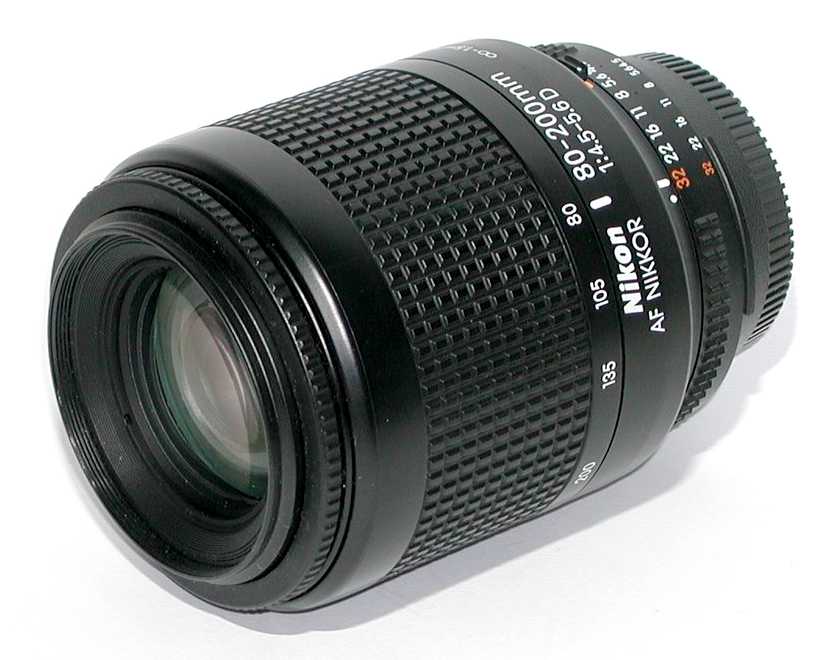
Nikon 80-200mm f/4.5-5.6 D AF

So this is the third zoom list I will have written about since starting this.  This one again is a consumer lens from Nikon that can be found quite affordably at ebay.  If you want a detailed review go check out what Ken Rockwell has to say about the lens.

One thing that Rockwell talks about is the sharpness and brightness of the images you get with this lens.  And I have to say I quite agree with him.

landscape06

This picture was taken at full zoom and has very good brightness and crispness.  Here is a shot taken at full wide angle.  

landscape05


Even in a shadow at full zoom the lens picked up very good details.  But besides the sharpness and the brightness of the pictures what I really liked about this lens was just how light and easy it is to carry around.  The biggest problem with this lens is that the closest focal point is five feet.  But when you want to zoom in on something it is very handy.  Like the picture below.  

animal01

Or this picture of a skateboarder.

people01


All in all I really liked this lens.  Very crisp and bright pictures, focus was quick and precise and all in all very easy to use.  

I would give this a score of 8.0 out of 10. That's 8 for picture quality, 9 for ease of use, and 7 for usability.  The only problem with this lens is the short focal point and the fact that it really is not for indoor use with an aperture of 4.5-5.6.  But if you were taking a trip to a national park and hoping to get some good animal shots I think this would be an excellent lens for the job.

Here is the full gallery.

80-200mm f45-56 AF

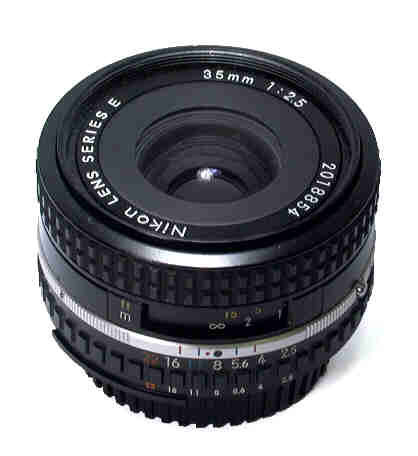
Nikon 35/2.5 Series E

It's been so long since I've done one of these entries I don't really remember my tone or what I was going for, so here goes.

In the late 70's Nikon decided they wanted to go after the consumer market and so they came out with two critical things.  One was the N2000 camera body.  It was affordable, had a motor drive for progressing the film, but not for rewind, and had limited features.  But for someone who wanted an easy to use SLR camera it was a great camera body.  Of course if you were a consumer you also needed an affordable lens and so they came out with the Series E lenses.  They had a few 50mm, 35mm, 28mm, 75-150mm, etc.  All were made with plastic bodies, instead of metal, and had light entry level feel.  In some cases the lenses have good reputations in others not so great.  Either way the plan for Nikon seemed to have worked and there are many of these lenses out there today being sold at places like ebay at a very affordable price.  So if you have an interest in trying your hand at a manual focus, fixed lens they are a cheap place to start.  The Series E will fit most if not all modern Nikon digital camera bodies and on some will work in aperture mode.

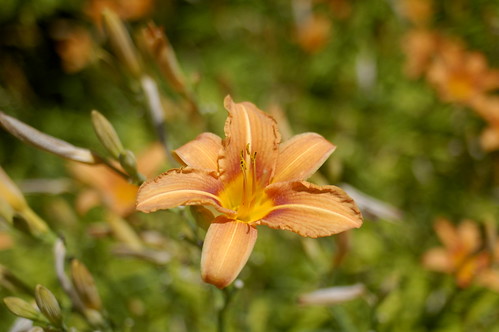
OK enough of that, let's talk a bit about the lens.  If you read reviews of the lens there are some consistent issues.  One is the sharpness of the lens.  At the middle apertures the sharpness is better, but there are complaints about it always being soft around the edges.  Second is poor quality bokeh.  Bokeh is a term used to describe the foreground or background of a picture that is out of focus.  You generally want that out of focus space to add something to picture but not distract from your focused object.  If you look at the picture below the complaint here would be that the background is too busy and doesn't allow the flower to stand out enough for the viewer to really focus on it.


flower02

In this next picture you can see how the sharpness works.  This was taken in low light so with the aperture wide open.  The center part of the picture is pretty sharp, but as you move out of the center it quickly gets soft.  Now if the aperture had been around 8 or 11 the sharpness would have been better and would have carried a bit further.  As it is in this picture I think the softness adds something to the picture.  

people02


In my case the lens I have also has a little haze to the lends so that is softening things up as well I'm sure, but all in all I found the lens to be easy to focus, lightweight, so easy to carry around and allowing you to have a lot of options.  

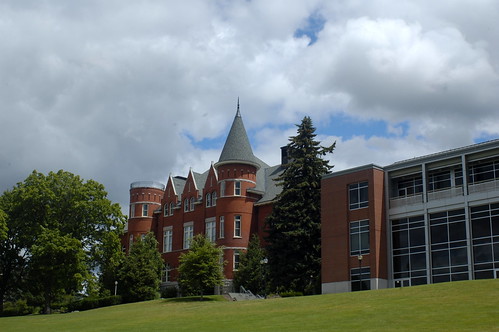
You can get a nice wide shot like the one below. 

architecture13


Or you can come in for some good close shots as it will focus down to a foot. 

flower12


All in all I found the lens to take good pictures and be fairly easy to use.  Anytime you have to do everything manually it makes it a bit more complex.  It does make me want to go out and buy a nice new auto-focus 35mm and I enjoy the fun you get in trying to move around to get the best shot you want.  A zoom is great when you have to be static, but with a small lens like this you can be so mobile it makes things fun.  

I would give this a score of 6.33 out of 10.  That's 6 for picture quality, 6 for ease of use, and 7 for usability.  

Here is the full gallery.


35mm f25 Series E


Wednesday, June 29, 2016

Nikkor C 43-86/3.5 AI'd

This continues my series on my old camera lenses.  This time it is a lens that is thought by most to be the worst lens Nikon ever made.  If you want to get a simple feel for this take here is a quote from Ken Rockwell's site about this particular lens.
It's worse than the worst, because not only is it terrible by itself, it was so awful that it has tainted the reputation of all other zoom lenses to this day.
Those are pretty strong words, so let's see if we as complete amateurs can get a feel for this.

architecture12


We had a photo of this wall with our last lens and so perhaps this is the best example we can give to understand the biggest complaint about this particular lens.  There is a softness to this lens.  The lines aren't crisp, the colors can blur a bit.  From a lens what most photographers want is a picture that is very crisp, especially when distinguishing colors, letters, lines, etc.  Here is another example.

architecture02


In this example what you can see is that the letters look soft.  As though instead of being made of a hard object with sharp edges they are actually made of some soft material.

By the way here is another quote on this lens, this time from Fredrik Rasmussen.
I don't see any reason for getting this lens unless you want a paper weight, or if you just want to own a classic lens that is classically bad, or if you want something to compare the word useless for?
OK these are harsh words from two professional photographers and so where does that leave us with this lens.  Well the truth is they are professionals and so they are looking for something completely different than me.  Yes we both want great photographs, but I also want something that is easy to use and fun.  Fact is I found this lens to be a lot of fun and extremely easy to use.

First off it's a good weight and feels well balanced in your hand.  On mine the focus ring and zoom are very smooth and so easy to work while trying to get your shot.  The zoom range is a bit odd but it gives you enough room for some maneuvering.

Second off it is fast enough at 3.5 all the way through the zoom range that you can shoot inside a well lit room with no flash.

people04


As you can see in the picture above this was inside the old train depot in Dayton, Washington and I was able to take photos just fine.  Again if you look closely at the photo you'll see that softness that drives the professionals crazy, but for me I'm happy because I got a nice picture using the manual settings on my digital camera.  If I can do that easily then that's a positive for me and the lens in question.

The biggest drawback is that it has a 4 foot focal limit.  Which means you have to be at least 4 feet from something to focus it.  For traveling this can make it hard at times to get the picture you want.

people03


My wife had a tricky time getting this picture because she had to backup in her chair with limited room to get far enough back to focus the picture.  Again if you look close at this photo you'll see just how soft things are, like the word Fanta.

All in all we enjoyed taking this lens on a day trip and I enjoyed walking around town taking photos with it.  It is a fun lens and very easy to use.  Because of its bad reputation and mass quantities produced in the 70's they are cheap and easy to find on ebay.  So if you would like to try out a manual zoom on your brand new Nikon D3300 this is a cheap and fun way to see if it is something you are interested in pursuing further.

Of course I would take my 18-55mm lens that came with my camera over this one, but I found this lens to be a lot more fun to use than the 18-135mm I wrote about last time.


Here is the full gallery.

43-86mm f35 AI


Wednesday, June 22, 2016

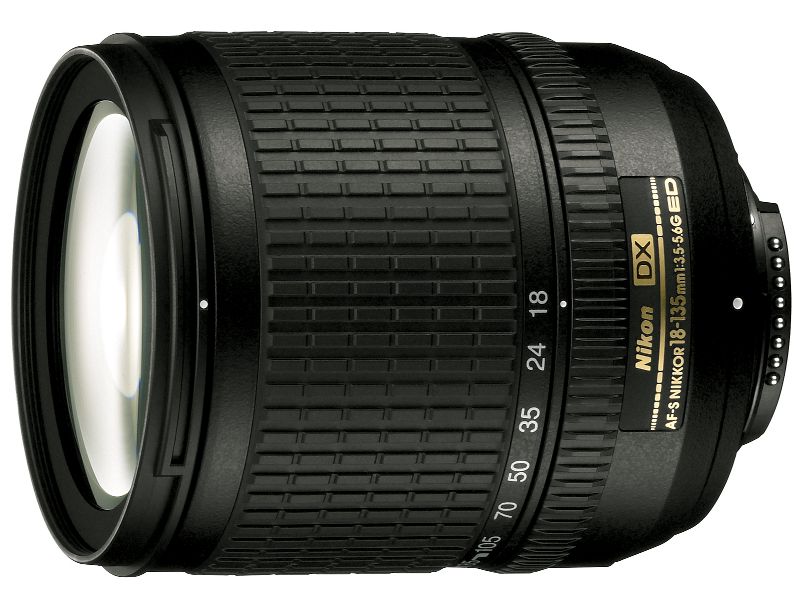
Nikon 18-135/3.5-5.6 G IF-ED


So I'm trying to get back into photography and have started working to get rid of all my old equipment.  As I do so I thought I would take it out and take photographs and then write about the experience here.  Why not I figure.

Anyhow this is my first entry for doing this so we'll see how it goes.  All of these photos were taken using a Nikon D40 and the lens you see pictured to the left the AF-S Nikkor 18-135mm/3.5-5.6 G IF-ED.  Got to love the names they come up with.  

Let me just start by saying in case someone besides the three people who normally read this blog stumble upon this. I am not a professional photographer. I am not even a serious amateur. I'm simply someone who enjoys taking pictures. So these will be the impressions of a pure amateur and what I think of the lens.

All of these photos were also taken in full "Auto" mode and were then edited using GIMP.

flower09

OK my thoughts.  The best part about this lens being an 18mm to 135mm is the 135mm part of it all.  The picture above was taken zoomed in with me standing at full height.  For doing nature photography like this it's very handy.  I used the same thing for these other flower photos.

flower04
What is nice about this is that if you are traveling and you come upon some nice flowers like this you want to photograph it's fairly quick and easy to do.  If I had had my standard 18-55mm lens that came with the D40 I would have had to squat down, etc. to get the same effect that I could do here standing at a comfortable distance.

The 135mm zoom also allowed me to take a nice shot of a squirrel that I saw having a snack one morning.
flower01

In that squirrel photo you also see the limitation of a 135mm lens as compared to a 200 or 300. I could get a nice shot of the squirrel, but a bit more zoom would have been nice.

In fact what I found in using this lens was that I was either on one end of the spectrum or the other, probably because of what I was shooting. If I had been at home taking pictures of the kids I would have been living more in the middle, but walking around Pullman taking photographs I found I lived more on the edges.

animal01

The biggest problem I found with the lens was that in low light situations it was a bit over-matched. Just shooting in early morning light I found that the lens really struggled when I was shooting in shadows, especially at the wider angles.

The only other issue I ran into was that I found it quite difficult to shoot in manual mode.  It's one reason why all of these shots were done in "Auto" mode.  Perhaps with time I would get used to all the controls being on the camera, like aperture, and not a physical dial on the lens, but for this first adventure I found it frustrating to try and manage it manually.

architecture06
If I could only have one lens and had to choose between this lens and the 18-55mm lens that came with my camera, I would choose the 18-55. It's lighter and is a great range for taking family photos. If I were going on a trip I would take the 18-135mm as it gives you more flexibility.


Here is the full gallery.

18-135mm F35-56 G ED